

Hot Water Tank Maintenance in Weaverville, NC: A Homeowner’s Guide
If you own a home in Weaverville, your water heater quietly works harder than almost any other appliance in the house. Between the cold mountain groundwater, our 2,180-foot elevation, and the long winters we get here in Buncombe County, that tank takes a beating. The good news? A handful of simple water heater maintenance tasks can keep it running for years longer than it otherwise would. Here’s what you need to know.
Key Takeaways
Weaverville homeowners who stay on top of regular water heater maintenance avoid the most common (and most expensive) tank failures. Here’s the short version for those in a hurry:
- Regular hot water heater maintenance, including annual flushing and periodic anode rod checks, can add 3 to 5 years to a typical tank’s life. With consistent care, regular inspections can extend a water heater’s lifespan to 12 to 15 years.
- Test the pressure relief valve at least every six months. This safety device prevents dangerous pressure buildup and is required by North Carolina code on every residential tank.
- Weaverville’s municipal water is soft (around 13 to 21 ppm hardness), which means less sediment buildup but faster anode rod depletion. Homes on well water may see more mineral accumulation and should flush more often.
- Routine care improves energy efficiency and water quality while preventing costly leaks and failures.
- DIY is reasonable for visual checks and minor flushing. Gas water heater issues, pilot light problems, and anything involving gas valves or electrical work belong to a licensed local pro.
How Your Hot Water Heater Works
Understanding the basic steps your water heater follows makes every maintenance task less intimidating. You don’t need an engineering degree; just a quick mental picture of what’s happening inside.
Cold water enters through a supply line at the top of the tank and travels down a dip tube to the bottom. In a gas water heater, a burner underneath (typically 30,000 to 50,000 BTU in Buncombe County homes) fires up and heats the water. In an electric water heater, one or two heating elements (usually 4,500 watts each) warm the water inside the tank. Hot water rises naturally and exits through a pipe at the top, flowing to your kitchen sink, shower, or any hot water faucet you open.
A water heater tank holds 40 to 80 gallons of water in most Weaverville single-family homes. The insulated shell (around R-10 in newer models) keeps that stored hot water warm between uses. Older tanks with thinner insulation lose more heat, which means higher energy bills and more frequent heating cycles.
Tankless water heater systems work differently. Instead of storing heated water, they heat water on demand as it flows through a compact heat exchanger. That means a different set of maintenance routines, which we’ll cover below.
One local factor worth knowing: Weaverville sits at about 2,180 feet, and winter groundwater temperatures drop lower than they do in the Piedmont. That means your tank needs more time to bring incoming cold water up to your desired temperature. Expect 5 to 15 percent longer recovery times compared to sea-level homes, which is why proper insulation and correct thermostat settings matter even more here.
Key Parts of a Hot Water Tank You Should Recognize
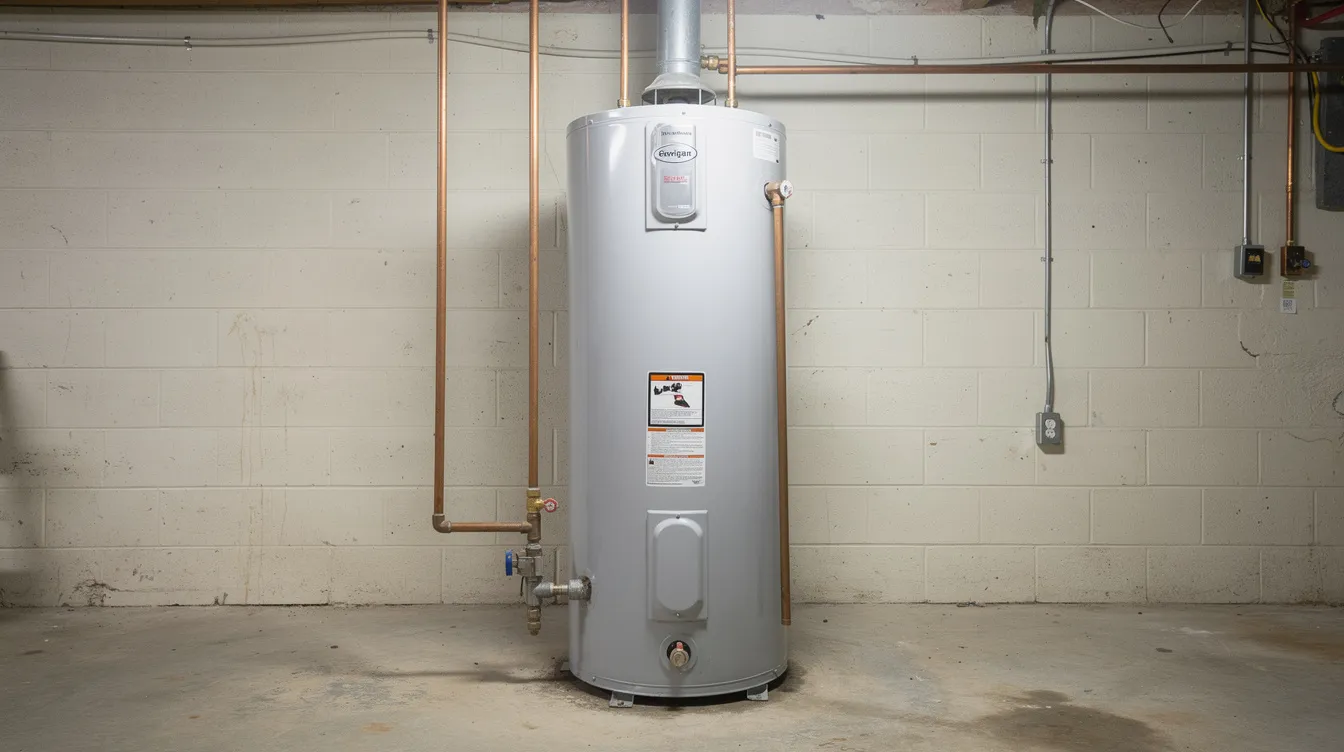
Before you attempt any hot water tank maintenance, you should be able to point to each of these parts on your own unit. A few minutes of identification now saves confusion later.
Water shutoff valve: Located on the cold water supply line above the tank. Turning this off stops water from flowing into the heater during maintenance.
Gas valve (gas units) or circuit breaker (electric units): On a gas water heater, the gas valve sits near the bottom of the tank by the burner. On an electric water heater, the power supply runs to a dedicated circuit breaker in your electrical panel.
Pressure relief valve (T&P valve): Usually located on the side or top of the tank, with a discharge pipe running down toward the floor. The pressure relief valve prevents dangerous pressure buildup inside the tank. North Carolina Administrative Code (13 NCAC .0405) requires every residential storage tank to have an ASME-stamped T&P valve.
Anode rod: Accessed through a hex-head fitting on top of the tank. The anode rod protects the tank from rust and corrosion by sacrificing itself; it corrodes so the steel tank walls don’t have to.
Thermostat: The thermostat controls the water temperature in the heater. On gas units, it’s a dial on the gas control valve. On electric units, it’s located inside behind an access panel on the side of the tank. North Carolina law (NC §66-27.1A) requires manufacturers to preset new water heaters to no more than 120°F.
Drain valve: Sits at the bottom of the tank. It’s either brass or plastic and is where you connect a garden hose to flush out sediment. The water heater’s drain valve is your primary access point for annual flushing.
Essential Safety Precautions Before You Start
Safety comes first when you’re working around scalding hot water and gas or electric water systems. The water inside your tank can exceed 140 to 160°F, which causes severe burns in seconds.
- Turn off power and water before maintenance tasks. For an electric water heater, switch off the dedicated circuit breaker and confirm power is off with a non-contact voltage tester. For a gas water heater, set the gas control to “pilot” or “off.”
- Let the tank cool. If you’re doing a full flush, let the heater sit for a few hours (or overnight) after shutting it off. This reduces the scalding risk from stored hot water.
- Wear safety goggles and heat-resistant gloves. Closed-toe, non-slip shoes are also a good idea, especially on smooth basement floors common in Weaverville homes.
- Gas safety precautions: Before doing any work near a gas water heater, sniff for gas. If you detect a gas smell, do not proceed. Open windows, leave the house, and call your gas utility. Make sure your utility room or basement has good ventilation, and never work near open flames.
- Know your limits. If any step feels unclear, especially around gas valves, wiring, electrical connections, or pressure relief components, stop and call a licensed Weaverville plumber. North Carolina regulations require qualified persons for certain work on these systems.
Quick Monthly and Seasonal Checks
These checks take 5 to 10 minutes. Set a phone reminder for the first of each month and at the start of the Weaverville heating season in October or November.
Visual inspection: Inspect your water heater every two to three months for leaks. Look for rust streaks, moisture around fittings, and water pooling around the heater. Water pooling around the heater indicates a leak that needs attention before it becomes a larger problem. Inspecting for leaks and corrosion can catch small issues before they worsen.
Listen: Strange noises suggest sediment buildup inside the tank. Rumbling or popping sounds from the bottom of the unit mean minerals or grit are interfering with heat transfer.
Thermostat check: Check the thermostat setting every few months to confirm it’s at 120°F. Setting the temperature to 120°F extends water heater lifespan, reduces scalding risk, and keeps energy costs in check. A temperature setting of 120°F is recommended for efficiency.
Clearance: Keep the area around the heater tank free of boxes, paint cans, chemicals, and dust. Gas water heaters need clear airflow for combustion; clutter near any heater is a fire hazard.
Water pressure: Checking water pressure helps prevent premature leaks. If you notice fluctuations in water flow at your fixtures, it’s worth having your plumbing system evaluated.
Annual Flush: Removing Sediment From the Heater Tank
Weaverville’s municipal water supply is soft, which means less mineral scale than you’d see in harder-water areas. But even soft water carries particulate from supply lines, and homes on well water can accumulate sand, silt, and iron at the bottom of the tank. Flushing the tank annually prevents sediment buildup and keeps your heater running at peak efficiency. A water heater flush should be done at least once a year.
Here are the basic steps:
- Turn off the power supply (breaker for electric, gas valve to “pilot” for gas).
- Attach a garden hose to the water heater’s drain valve and run the hose to the drain or outside.
- Open a nearby faucet (a hot water faucet on a nearby sink works well) to break the vacuum inside the tank.
- Open the drain valve and let at least a few gallons flow out. For a thorough flush, drain the main tank completely until water runs clear.
- Close the drain valve, remove the garden hose, and restore power and water supply.
What comes out tells you a lot. Milky or cloudy water, sand-like grit, or rusty discharge all point to built up sediment. Sediment layers block heat and cause increased utility bills because the heating element or burner has to work harder to heat water through the debris layer. Removing that sediment can cut energy costs by 10 to 15 percent.
Homeowners with well systems or those in areas with slightly harder water north of Asheville should consider flushing every 6 months instead of once a year.
Tankless water heater units require a different process: you circulate vinegar or a commercial descaler through the heat exchanger. Many homeowners prefer professional service for this.
After closing the drain valve, check for leaks. If you have a plastic valve, tighten gently. Plastic valves can crack if overtightened; brass valves hold up better over time.

Inspecting and Replacing the Anode Rod
The anode rod is the single most cost-effective part to maintain on a storage water heater. Replacing the anode rod every 3 to 5 years prevents tank corrosion and is the highest-return maintenance task you can do. An anode rod needs replacement every 3 to 5 years, depending on water chemistry and usage.
Signs your anode rod check is overdue:
- A rotten-egg odor coming from your hot water (not from cold water)
- Rusty water from hot taps. Rusty water indicates internal corrosion in the tank.
- Visible rust around the top of the heater tank
How to inspect it:
- Shut off the power supply and close the water supply valve.
- Open a hot water faucet to relieve pressure in the tank.
- Use a socket wrench (1-1/16″ is common) to loosen the anode rod from the hex fitting on top of the tank.
- Pull the rod out and look at it.
If more than 50 to 75 percent of the rod is consumed, or the steel core wire is visible along most of its length, it’s time for a new anode rod.
Magnesium rods offer stronger protection in soft water like Weaverville’s municipal supply but deplete faster; they can last only 1 to 2 years if your water temperature runs above 130°F. Aluminum/zinc rods are the better choice if you’re dealing with sulfur odor issues. Many WNC homeowners opt for aluminum/zinc for that reason.
After installing a new rod, write the replacement date on the tank with a marker. That way you’ll know exactly when to check again.
If the rod won’t budge, don’t force it. Excessive force can damage the heater tank or plumbing. Call a local professional plumber for stuck anode rods.
Testing the Pressure Relief Valve Safely
The T&P valve is the most critical safety device on your water heater. Test the TPR valve every six months. The pressure relief valve prevents dangerous pressure buildup that could otherwise lead to tank explosions.
How to find it: Look on the top or upper side of the tank. A metal or plastic discharge pipe runs from the valve down toward the floor. NC code requires that discharge pipe to terminate within 18 inches of floor grade or to a safe location outside.
How to test it:
- Place a bucket under the discharge pipe to catch water.
- Gently lift the valve’s lever for one to two seconds. You should see water release water from the pipe and hear a brief burst of air.
- Let the lever snap back. The flow should stop completely.
If the valve won’t open, won’t reseat, or drips continuously afterward, it needs replacement by a qualified plumber. Stand clear of the pipe outlet during testing; the water that comes out is hot.
In older Weaverville homes that lack a floor drain near the heater, you may want a professional to test the valve and reroute the discharge pipe to a safe location if needed. NC code prohibits any valves, tees, or restrictions between the T&P valve and its outlet.
Gas Water Heater Maintenance Basics (Pilot Light and Burner)
Gas water heater work involves combustion. Only take this on if you’re comfortable with safety precautions and can follow the manufacturer’s instructions printed on the unit.
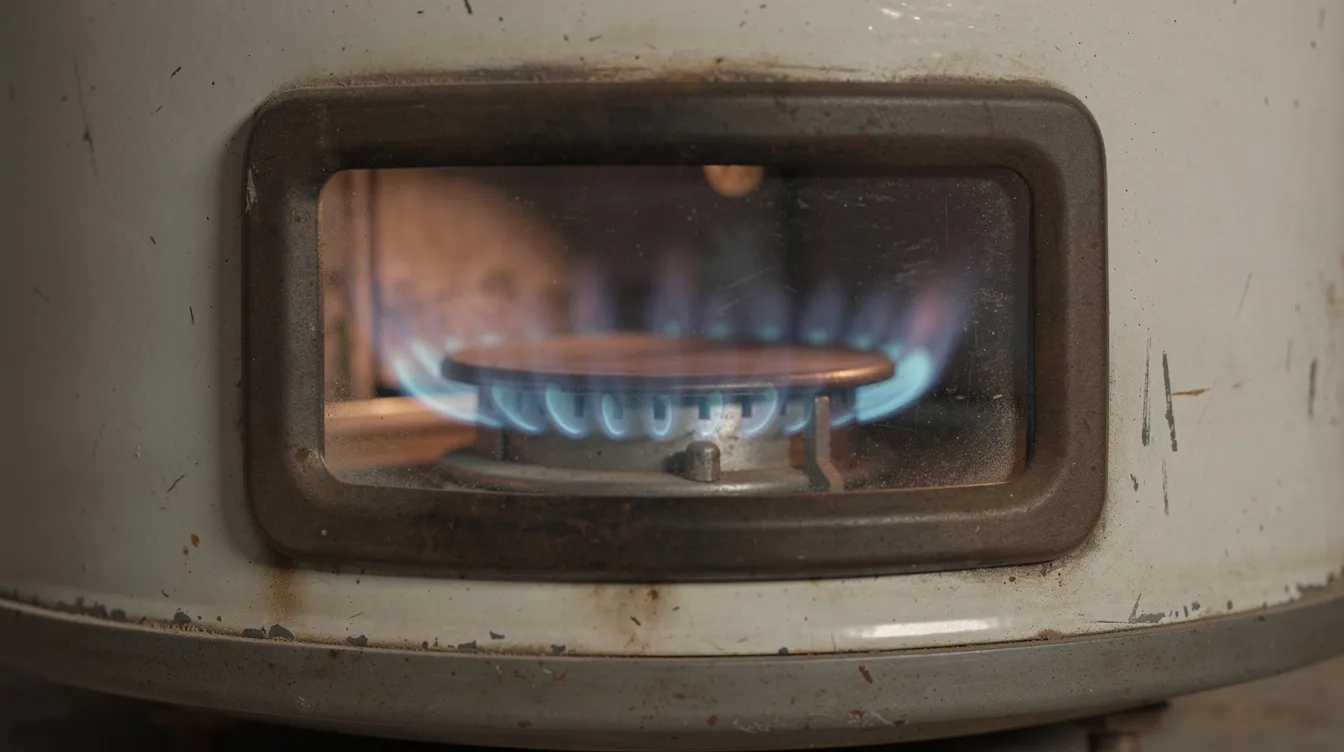
Start with a visual check. Look at the burner flame through the viewing window or access opening at the bottom of the tank. A healthy flame is mostly blue with small yellow tips. A yellow or orange flame, soot buildup, or debris around the burner means incomplete combustion and reduced energy efficiency.
The pilot light (or electronic ignition, on newer models) keeps the burner ready to fire. Frequent pilot light outages can signal draft problems from wind or vent blockage, dirty burners, or a failing thermocouple. If your pilot light won’t stay lit, follow the relighting instructions on the manufacturer’s label on your heater. If you smell gas at any point, stop. Do not attempt to relight.
We recommend annual professional service for older atmospheric gas water heaters, especially in Weaverville basements and crawlspaces where venting and draft can be tricky at elevation. A technician will clean the burner, check the gas valve, inspect venting, and test for carbon monoxide.
Any suspected carbon monoxide issue (headaches, nausea, beeping CO alarms) demands immediate action: shut the unit down, open windows, leave the house, and call emergency services.
Electric Water Heater Maintenance Basics
Electric water heaters avoid combustion risks but carry electrical hazards that require strict power-off procedures before any work.
Switch off the dedicated breaker for the unit at your electrical panel. Confirm power is off using a non-contact voltage tester at the wiring connections before you touch anything. Then you can remove the access panel to inspect elements or thermostat settings.
Common maintenance-related issues include:
- Tripped high-limit reset button: If your electric water heater suddenly stops producing hot water, check the red reset button behind the upper access panel. A tripped high-limit switch often indicates overheating, a faulty thermostat, or a grounded heating element.
- Sediment-damaged elements: When built up sediment covers the lower heating element, it can’t transfer heat to the water properly. Cold or lukewarm water shows the heater is struggling. Inconsistent heating can signal maintenance needs or a failing element.
- Loose wiring: Burnt odors, melted insulation, or repeating breaker trips are red flags. These require immediate professional repairs; do not reset the breaker and hope for the best.
Keep the area around electric water heaters dry and well-ventilated. Garages and crawlspaces in western NC see big humidity swings between seasons, and moisture near electrical connections is a recipe for trouble.
Caring for Tankless Water Heaters in Weaverville Homes
Tankless water heaters don’t have a large heater tank to flush, but they still need regular maintenance to keep the heat exchanger and water flow performing well.
The key components you should know: cold and hot isolation valves (for service access), a pressure relief valve, an inlet filter screen, and the internal heat exchanger where scale accumulates.
A typical annual descaling process looks like this: close the isolation valves, connect hoses from the service ports to a small pump and a bucket of white vinegar or commercial descaler, and circulate the solution for 45 to 60 minutes. Weaverville homeowners on well systems with higher mineral content should descale every 6 to 12 months to avoid error codes and reduced water flow.
Clean the inlet filter screen every few months. A clogged screen restricts water flow and forces the unit to work harder.
For gas tankless units, we recommend annual professional service to check combustion, venting, and any stored error codes. Well-maintained tankless water heaters can last 18 to 20 years.
Maintenance Schedule Template for Weaverville, NC Homes
Here’s an at-a-glance schedule tailored to typical Weaverville water quality and usage.
Frequency | Tasks |
|---|---|
Monthly | Quick visual leak check around fittings and base. Verify thermostat at 120°F. Clear clutter and dust from around the unit. |
Every 2-3 months | Inspect water heater for visible issues: leaks, rust, moisture. Listen for rumbling or popping. Check water pressure at a nearby faucet. |
Every 6 months | Test the TPR valve. Partial flush (drain a few gallons via the hose to the drain). Inspect inlet screen on tankless units. |
Yearly | Full tank flush until water runs clear. Check anode rod accessibility. Professional burner/vent inspection for gas units. Annual inspections are a smart investment. |
Every 3-5 years | Inspect and replace the anode rod. Check the anode rod every 3 to 5 years without fail. |
Every 4-5 years | Perform a full professional inspection. A pro can catch issues you can’t see, like weakened tank linings or corroded electrical connections. |
Replacement planning | Standard tank water heaters: around 12 to 15 years with regular maintenance. Tankless: 18 to 20 years. If your unit is past 10 years, start budgeting for a new water heater. |
Routine maintenance can prevent costly repairs and extend the life of your unit by 3 to 5 years. That’s real money saved on both emergency fixes and a water heater’s lifespan overall.
When to Call a Local Weaverville Professional
Knowing when to stop and call a pro protects you, your home, and your hot water heater warranty.
Call a licensed professional for:
- Persistent leaks or visible tank bulging
- Recurring pilot light failure or any gas smell
- Pressure relief valve replacement or gas valve work
- Internal electrical work, including element replacement and wiring
- Any burning odor from gas or electric units
- Costly repairs on units older than 12 years (it may make more sense to replace)
A professional plumber familiar with North Carolina codes can also advise on upgrades like expansion tanks, recirculation pumps, a water softener, or switching to a tankless water heater for better energy efficiency.
Schedule proactive inspections before winter, when demand for hot water spikes and a breakdown leaves you without a hot shower on a 20°F Weaverville morning. If you’re not sure where to start or want someone to handle the whole list, give us a call or book through PikeHomeServices.com. We’re happy to take a look and make sure your system is ready for whatever the mountain weather throws at it.
FAQ
How often should I flush my hot water heater in Weaverville, NC?
Once per year is a solid baseline for most Weaverville homes on city water. Flush the tank at least once a year to prevent sediment from reducing efficiency. Houses on well systems, or those that notice grit or discoloration when draining, should flush every 6 months. If a tank has never been flushed and is older than 8 to 10 years, have a professional evaluate it first. Draining an old, neglected tank can reveal weakened seals or a deteriorated lining, and you don’t want to discover that with a flooded utility room.
What temperature should I set my water heater to?
Set the thermostat to 120°F for efficiency, safety, and longevity. At 120°F, you reduce scalding risk, slow mineral and scale buildup inside the heater tank, and keep energy costs lower. Households with immune-compromised members may need to discuss a slightly higher setting with their doctor and a plumber to balance bacteria control (specifically Legionella) against burn risk.
Are rotten-egg smells in my hot water dangerous?
A sulfur or rotten-egg odor from hot water typically comes from bacteria reacting with a magnesium anode rod, not from Weaverville’s municipal water supply itself. It’s unpleasant but not usually a health hazard in treated municipal water. Flushing the tank and switching to an aluminum/zinc anode rod often solves the problem. Homes on well water with sulfur odor should have a professional evaluate whether shock chlorination or a different filtration approach is needed.
Can I install an insulation blanket on my hot water tank?
Many older electric water heaters benefit from an insulation blanket. Insulation blankets can reduce heat loss by 25 to 45 percent and can reduce energy costs by about 16 percent on older, poorly insulated tanks. On gas water heaters, you must keep the top, thermostat, burner access, and pressure relief valve clear of insulation material. Modern high-efficiency models (R-10 or higher factory insulation) usually don’t need an additional blanket. Follow the manufacturer’s instructions and local code requirements; proper insulation is one of the easiest ways to cut heat loss on an older unit.
Does local water quality in Weaverville really affect my water heater’s lifespan?
Yes. Weaverville’s treated municipal water is soft (around 13 to 21 ppm hardness), which means less scale but faster depletion of sacrificial anode rods due to corrosive elements in low-mineral water. Homes on well systems can see hardness levels climb higher and may experience faster sediment buildup. If you’re seeing frequent element failures, noisy tanks, or rusty hot water over an extended period, ask a plumber about water testing or installing a whole-house filter. Matching your maintenance schedule to your actual water chemistry, rather than following a generic guide, is what keeps your tank running past the 12-year mark and into vacation mode instead of replacement mode.