

Tankless Water Heater Dishwasher Issues: Why Your Dishes Aren’t Getting Clean
If your dishes are coming out spotty, greasy, or just plain dirty after switching to a tankless water heater, you’re not imagining things. Compatibility issues between tankless water heaters and dishwashers are one of the most common calls we get at Pike Home Services, and the fix is usually more straightforward than most people expect.
Key Takeaways
Many dishwashers don’t play nicely with tankless water heaters right out of the box. The good news is that these problems almost always have a solution once you know what’s causing them.
- Tankless water heaters require a specific minimum flow rate to trigger ignition, and many modern dishwashers draw hot water in short, intermittent bursts that fall below that threshold.
- Common symptoms include greasy dishes, cloudy glasses, cycles that run 20+ minutes longer than expected, and sanitize modes that never reach the right temperature.
- These potential issues stem from sizing, settings, and installation details, not from tankless systems being a bad match for dishwashers.
- Pike Home Services can inspect both your tankless unit and dishwasher, then recommend adjustments, repairs, or upgrades tailored to your home’s layout and your household’s actual hot water demand.
How Tankless Water Heaters Work (and Why Dishwashers Can Be Tricky)
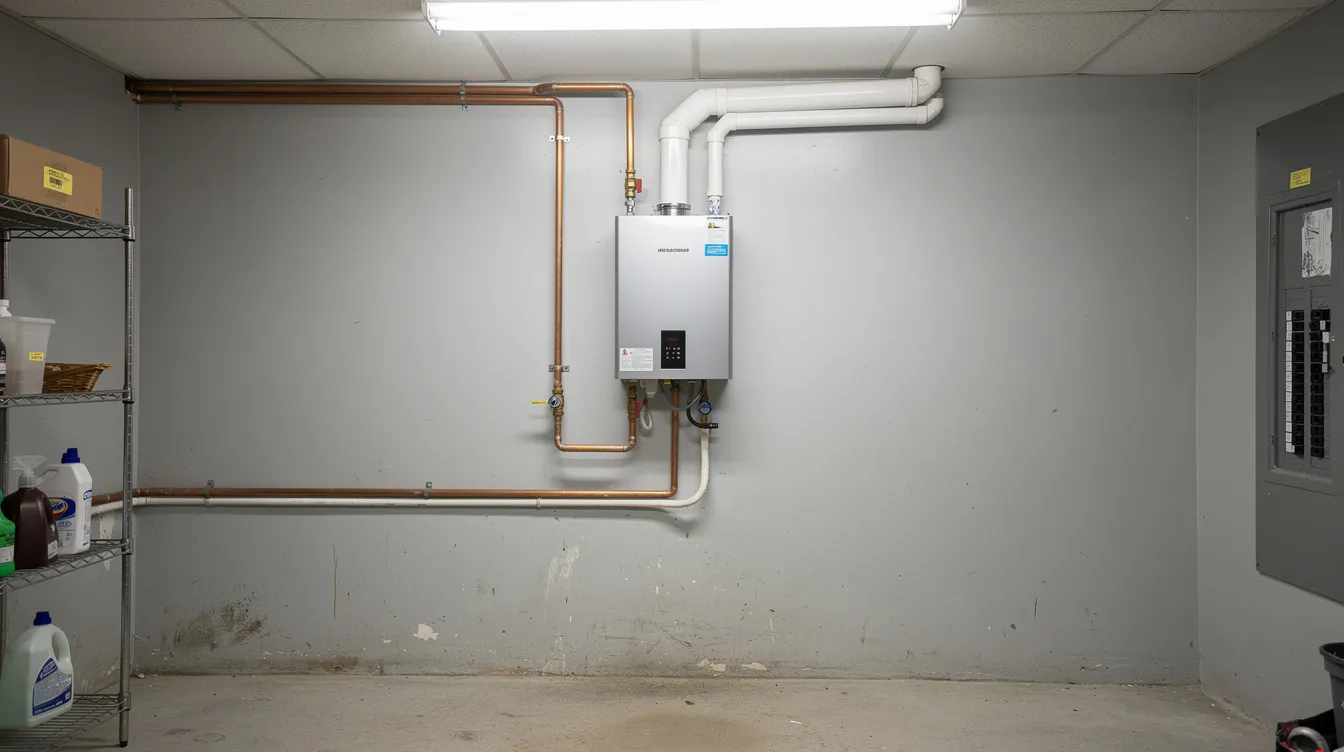
A tankless water heater, sometimes called an on demand heater, heats water only when you turn on a fixture. There’s no storage tank full of hot water sitting in your basement or garage. Instead, cold water flows through a heat exchanger where a gas burner or electric heating element brings it up to your desired temperature in seconds. Tankless systems heat water instantly as it flows, which is why they’re often marketed as providing endless hot water.
Here’s where dishwashers get tricky. Every tankless unit has a minimum flow rate, usually between 0.4 and 0.6 GPM for gas tankless models, that the water must exceed before the burner fires. Modern dishwashers, especially Energy Star models built after 2015, use very little water per cycle (3.2 gallons or less for a standard-size unit) and fill in small bursts rather than one continuous draw. Those bursts can drop below the tankless heater’s activation threshold, meaning the unit never fires. Unlike traditional tank water heaters that keep 40 to 80 gallons of hot water ready at all times, tankless units respond to every on/off change in the dishwasher’s fill cycle. Tankless water heaters are about the size of a suitcase and can be wall-mounted, saving floor space, but that compact design doesn’t help if the dishwasher can’t trigger the burner.
Most Common Tankless Water Heater Dishwasher Issues
After a new tankless water heater installation, we regularly hear from homeowners whose dishwashers “suddenly” stopped cleaning well. The heater works fine for showers and the kitchen sink, but the dishwasher tells a different story.
Here’s what we typically see:
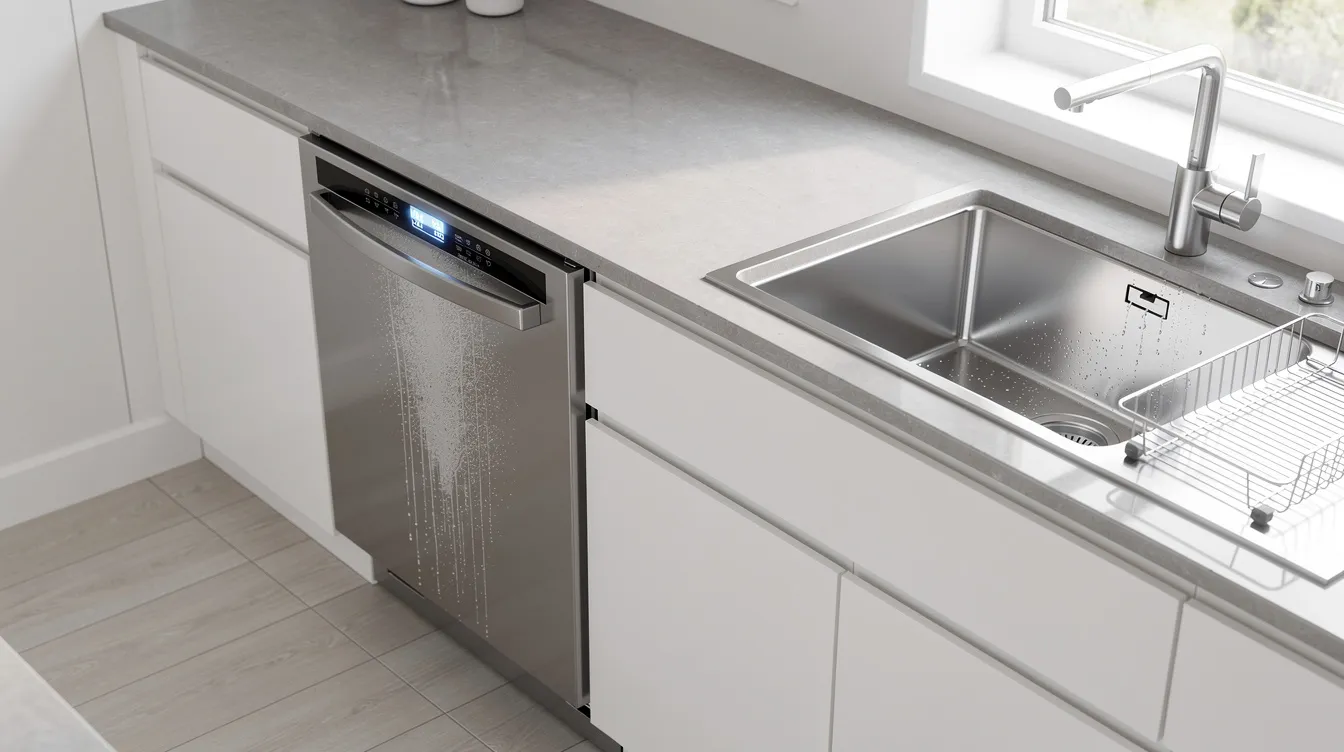
- Greasy plates and food residue sticking around after a full wash cycle, even with good detergent.
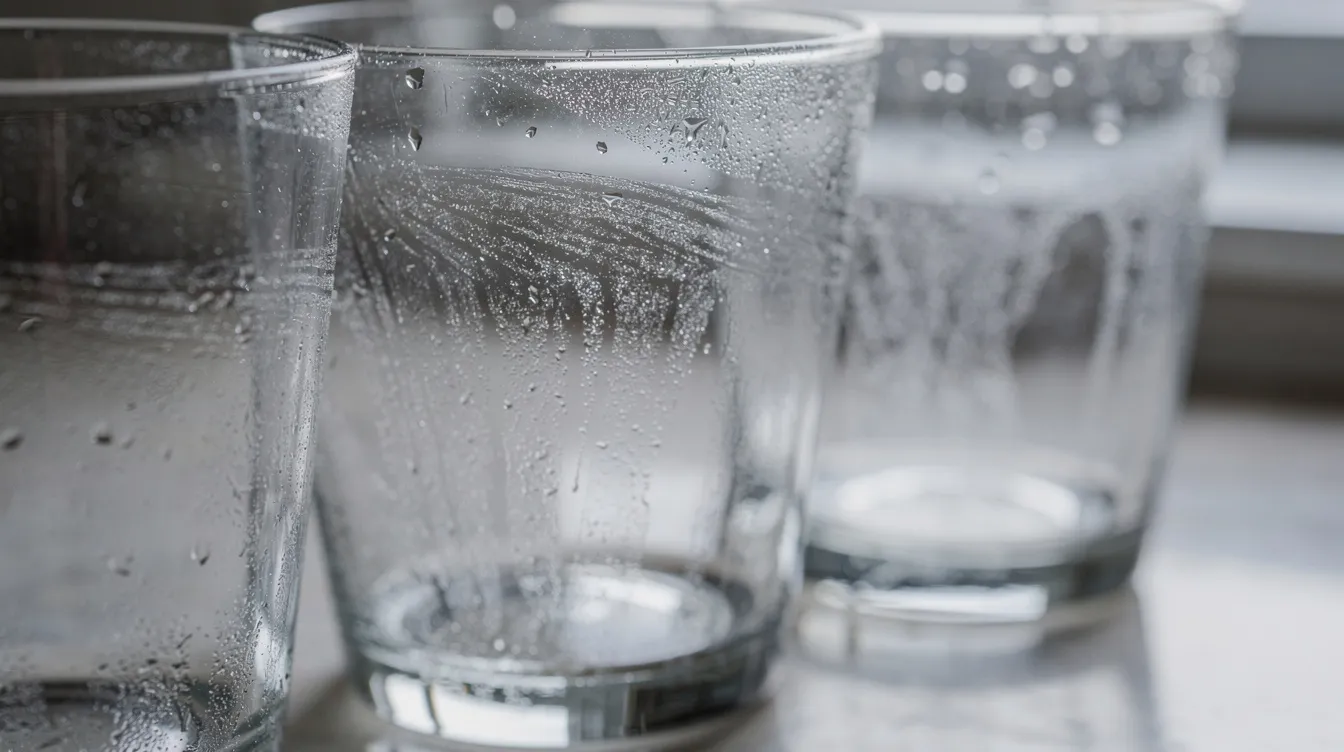
- Cloudy glassware caused by cycles that never reach proper hot water temperature for rinsing.
- Run times jumping from 70 minutes to 90+ minutes as the dishwasher’s internal heating element works overtime to compensate for cooler water.
- Intermittent error codes when incoming hot water supply is unstable or drops out mid-cycle.
Tankless water heaters can struggle to provide sufficient hot water if the dishwasher fills slowly or intermittently. These problems show up most often on eco cycles and quick-wash settings that use even less water. Some families notice the hot water at the sink runs perfectly fine while the dishwasher right next to it struggles. That gap points to flow and cycling issues specific to how the appliance draws water. Inadequate sanitation may occur if tankless heaters fail to deliver hot water quickly enough for dishwashers, leaving bacteria and grease behind.
Why Your Dishwasher Isn’t Getting Hot Water from a Tankless Unit
A few predictable technical reasons explain most tankless water heater dishwasher conflicts. Once you know what to look for, the problem usually falls into one of these categories.
Low flow rate and stop-start cycling. Modern dishwashers often draw water in short, intermittent bursts rather than a steady stream. Each time flow drops below the tankless unit’s activation threshold, the burner shuts off. When flow resumes, the burner reignites, but there’s a slug of cold water already sitting in the heat exchanger. A “cold water sandwich” occurs when dishwashers receive bursts of unheated water due to these flow interruptions, sending lukewarm or cold water into the wash cycle.
Temperature rise and distance. Dishwashers that are far from the tankless water heater may experience long wait times for hot water. In a spread-out Western North Carolina home, piping runs of 30 or 40 feet between the heater and the kitchen are common. Every foot of uninsulated pipe acts as a heat sink. During our cold mountain winters, when inlet water temperature can drop to 50°F, the tankless unit must generate a 70°F rise just to reach 120°F. Dishwashers typically require incoming water to be at least 120°F (49°C) for effective cleaning, and many perform best closer to 130°F or 140°F. If the new tankless water heater is set to 120°F for safety but piping losses drop that to 110°F at the dishwasher, you’ll notice the difference on every plate.
A properly sized and installed tankless water heater eliminates fluctuations in water temperature. But when any of these factors are off, the dishwasher is the first appliance to show it. We recommend having a Pike Home Services technician measure actual GPM and temperature at the dishwasher during a cycle to pinpoint the exact cause.
Tankless vs. Traditional Tank Water Heaters for Dishwashers
When comparing a tankless water heater versus a storage tank system, both can supply a dishwasher with clean, hot water. They just handle the job differently.
Storage tank water heaters keep a large reservoir (typically 40 to 80 gallons) at your set temperature. When your dishwasher opens its fill valve, hot water flows immediately from that reserve. That buffer smooths out the stop-and-start demand pattern. Traditional tanks can run out of hot water during peak usage in large households, but for a single dishwasher cycle, they’re forgiving. Storage tank water heaters last 8 to 12 years on average.
Tankless water heaters offer real energy savings by heating water only when it’s needed, eliminating standby heat loss from a tank sitting idle. Many tankless models are Energy Star certified for efficiency. Homeowners save approximately $100 per year with tankless heaters, and tankless water heaters can save up to 34% on energy bills compared to conventional storage tank models. Tankless heaters last between 20 and 30 years, reducing replacement costs over the life of the system. Multiple family members can use hot water simultaneously with tankless systems, provided the unit is sized correctly. Tankless heaters use energy only when hot water is needed, which keeps energy costs lower.
The trade-off: tankless systems need correct sizing, proper water heater installation, and setting adjustments to keep dishwashers supplied with reliable hot water. Poor dishwasher performance can waste water and energy through repeat cycles, eating into those cost savings. Pike Home Services helps homeowners decide whether to stay with tankless, switch back to a storage tank, or upgrade to a higher-capacity tankless based on whole-home needs.
Signs Your Tankless Water Heater Is Undersized for Your Kitchen
The dishwasher is often the early warning sign that a tankless water heater is too small for your household’s real-world use. Most homeowners don’t notice until demand spikes.
Watch for these patterns:
- Someone takes a shower while the dishwasher runs, and both get cooler water or cold showers result.
- Running the washing machine plus the dishwasher at the same time makes the tankless unit cycle on and off repeatedly.
- Hot water at the kitchen sink feels fine on its own but drops to lukewarm when any other fixture opens.
Running multiple hot water appliances simultaneously can exceed the flow capacity of tankless units. If your dishwasher needs about 1 GPM, a shower pulls 2.5 GPM, and you’re also running a sink at 1 GPM, that’s 4.5 GPM of demand. A gas tankless unit rated at 5 GPM at a 60°F temperature rise might only deliver 3 GPM at the 70°F or 80°F rise common in our mountain winters. The dishwasher gets starved first because it draws the least flow. Older 120k to 140k BTU models installed in homes with multiple bathrooms and open-concept kitchens often can’t keep up with enough hot water for everything at once.
Pike Home Services can perform a demand calculation on-site and recommend whether upsizing or adding multiple units makes sense for your home.
Installation and Plumbing Layout Problems That Affect Dishwashers
Even a correctly sized tankless water heater can struggle if the plumbing layout works against it. We see this often in older Asheville homes where the water heater sits in the basement or an exterior wall while the kitchen is at the opposite end of the house.
Common layout problems include very long hot water runs from the heater to the kitchen, especially in two-story or sprawling floorplans. Small-diameter piping (long runs of ½-inch line instead of ¾-inch) increases pressure drop and reduces effective flow at the dishwasher. Hard water can cause scaling and mineral buildup in tankless water heaters, reducing efficiency over time. In areas with hard water above 10 grains per gallon, scale can narrow heat exchanger passages by 30% to 40% within a few years if left unmaintained.
Thermostatic mixing valves set too low for safety can dilute hot water headed to the dishwasher line. Recirculation systems can help ensure hot water is readily available at the dishwasher, but if they’re configured with the wrong valves or lack a dedicated return line, the dishwasher may still see tepid water. Inspecting and cleaning inlet filters can improve the efficiency of both tankless water heaters and dishwashers. Tankless water heaters also require less installation space than tank models, and tankless systems free up space for storage or living areas; that saved valuable square footage in a basement, garage, or closet means a tankless unit doesn’t compete with your refrigerator or other appliances for limited space. But the physical location still needs to support proper piping to every fixture.
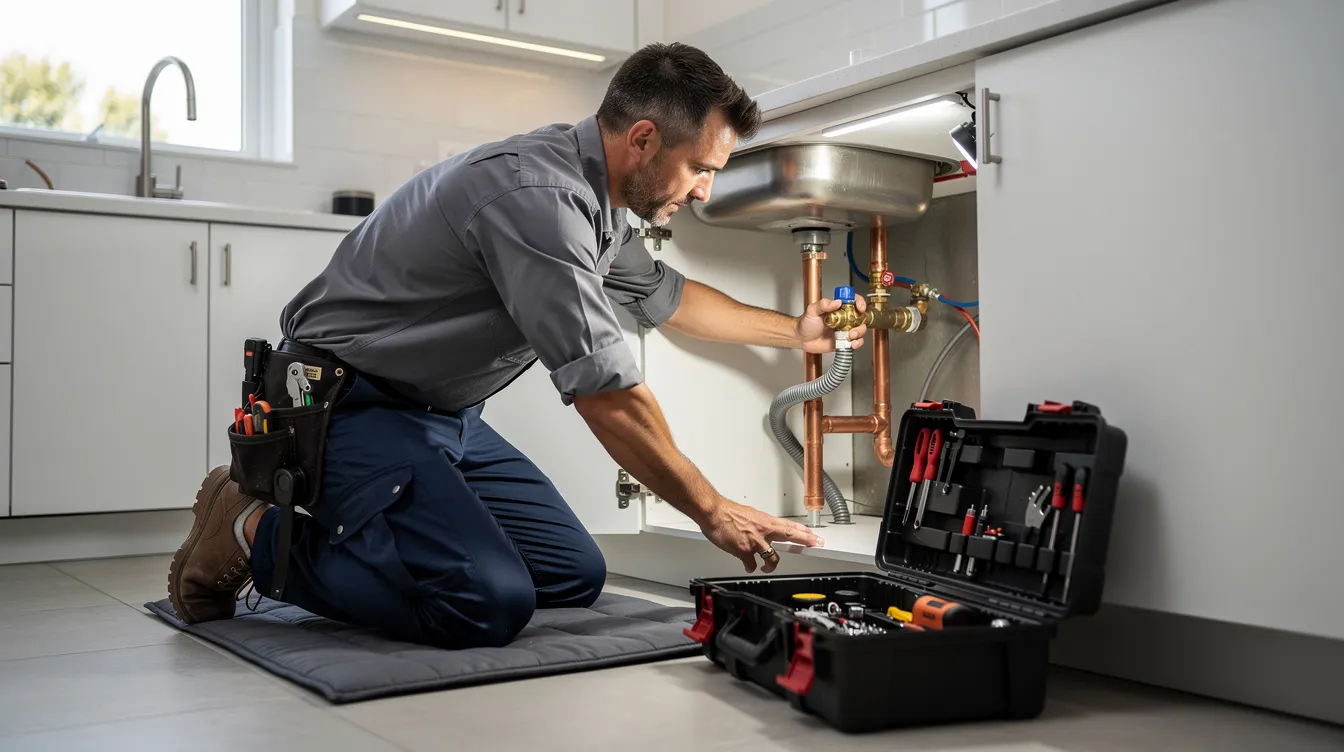
Pike Home Services will review the dishwasher supply line, shutoff valve, and nearby fixtures as part of a thorough water heater and plumbing evaluation, checking for any code or manufacturer requirements that affect performance.
How Pike Home Services Helps Solve Tankless Dishwasher Issues
DIY temperature adjustments or running the sink before starting the dishwasher can help in mild cases, but they rarely fix deeper compatibility problems. That’s where we come in.
Our typical approach starts with inspecting the tankless water heater model, age, gas or electricity fuel type, and maintenance history. We measure real-time hot water flow and temperature at the dishwasher during an actual wash cycle, not just at the sink. We also check whether your dishwasher has its own internal heater and what temperature it expects from the home’s water heater.
Based on findings, we may recommend:
- Adjusting temperature setpoints or flow settings on the tankless unit.
- Minor plumbing changes near the kitchen to improve flow rate and temperature stability.
- Installing a mini-tank buffer, which can provide immediate hot water for dishwashers by storing a small reserve right at the point of use.
- Flushing a tankless water heater annually to maintain its efficiency by removing mineral buildup (especially for homes in our area with harder water).
We’d rather spend 30 minutes diagnosing the real problem than have you run three dishwasher cycles just to get clean plates.
When It Makes Sense to Rethink Your Water Heater Strategy
Persistent dishwasher problems can be a signal of broader hot water limitations for the whole home, not just one appliance acting up.
Consider rethinking your water heating setup if your household has large households with multiple showers, laundry, and heavy dishwasher use that consistently overwhelm a single tankless unit. If you’re already planning a major remodel where relocating the water heater or re-piping the kitchen is on the table, that’s an ideal time to reassess. Most people don’t realize that a new water heater decision should factor in the home’s layout, not just the heater’s specs.
The long term ROI of tankless water heaters remains strong. Tankless systems can offset higher installation cost over time through lower energy costs and a 20- to 30-year life span. Federal and state incentives can lower tankless installation costs further. Homeowners save approximately $100 per year using tankless heaters, and those energy savings compound. But if poor dishwasher performance has you running extra cycles, wasting water, and risking water damage from overflowing or leaking appliances, those savings erode. The environmental impact of repeated wash cycles adds up too.
Pike Home Services can walk you through both tankless and traditional water heaters, including gas tankless and high-efficiency tank options, without pushing a one-size-fits-all solution. Tankless water heaters can save up to 34% on energy bills when properly matched to a home. We help you save energy and your utility bill at the same time. Treat dishwasher problems as a chance to evaluate whether your current setup truly matches your life and your living space.
If your dishwasher has been disappointing you since your tankless install, or if you’re thinking about making the switch to a new system, give us a call or book through PikeHomeServices.com. We’ll take a look at the whole picture, heater, plumbing, and appliance, so you get enough water at the right temperature every time.
FAQ: Tankless Water Heaters and Dishwashers
Can a tankless water heater run a dishwasher and a shower at the same time?
It depends on the unit’s GPM capacity at your specific temperature rise and your home’s incoming cold water temperature. If total demand (dishwasher at ~1 GPM plus shower at ~2.5 GPM) exceeds the unit’s rated flow, the dishwasher typically feels the shortage first, getting cooler water and delivering poor cleaning. Pike Home Services can calculate your simultaneous demand and tell you whether your current unit is sized right.
Do I need a special dishwasher for a tankless water heater?
No special model is required. However, dishwashers with their own internal heating element or a “high-temp wash” option handle cooler inlet water better by boosting temperature during the cycle. Check your dishwasher manual for minimum incoming water temperature requirements. If you’re installing a new dishwasher alongside an existing tankless system, Pike Home Services can review compatibility before everything is hooked up.
Will raising my tankless water heater temperature fix dishwasher problems?
Bumping the setpoint from 120°F to 130°F helps in some cases, but it won’t solve low-flow or sizing issues. Higher settings also increase scalding risk at faucets, showers, and anywhere else in the house, so anti-scald devices become necessary for safety. Adjust temperatures only after a professional evaluation to balance performance and safety.
Is adding a small storage tank to my tankless system a good idea?
A small buffer tank near the kitchen can stabilize temperature and flow for sensitive appliances like dishwashers. It needs to be designed and installed correctly to maintain energy efficiency and avoid creating new problems. The installation cost and space requirements vary by home. Consult Pike Home Services to find out if a buffer tank fits your plumbing layout and hot water usage patterns.
How do I know if the problem is my dishwasher or my tankless water heater?
Start with a simple test: if other fixtures get steady hot water while the dishwasher fails to clean, the appliance itself may be at fault. If multiple fixtures lose temperature or flow during peak demand, the water heater or plumbing is the more likely culprit. Error codes on the dishwasher combined with lukewarm dishes often point to inconsistent hot water supply. Tankless water heaters require annual descaling in hard water areas, and routine maintenance for tankless heaters is simpler than for tank models, but skipping it causes performance problems that look like dishwasher failures. Pike Home Services can test both during the same visit so you get a clear answer instead of guesswork.